
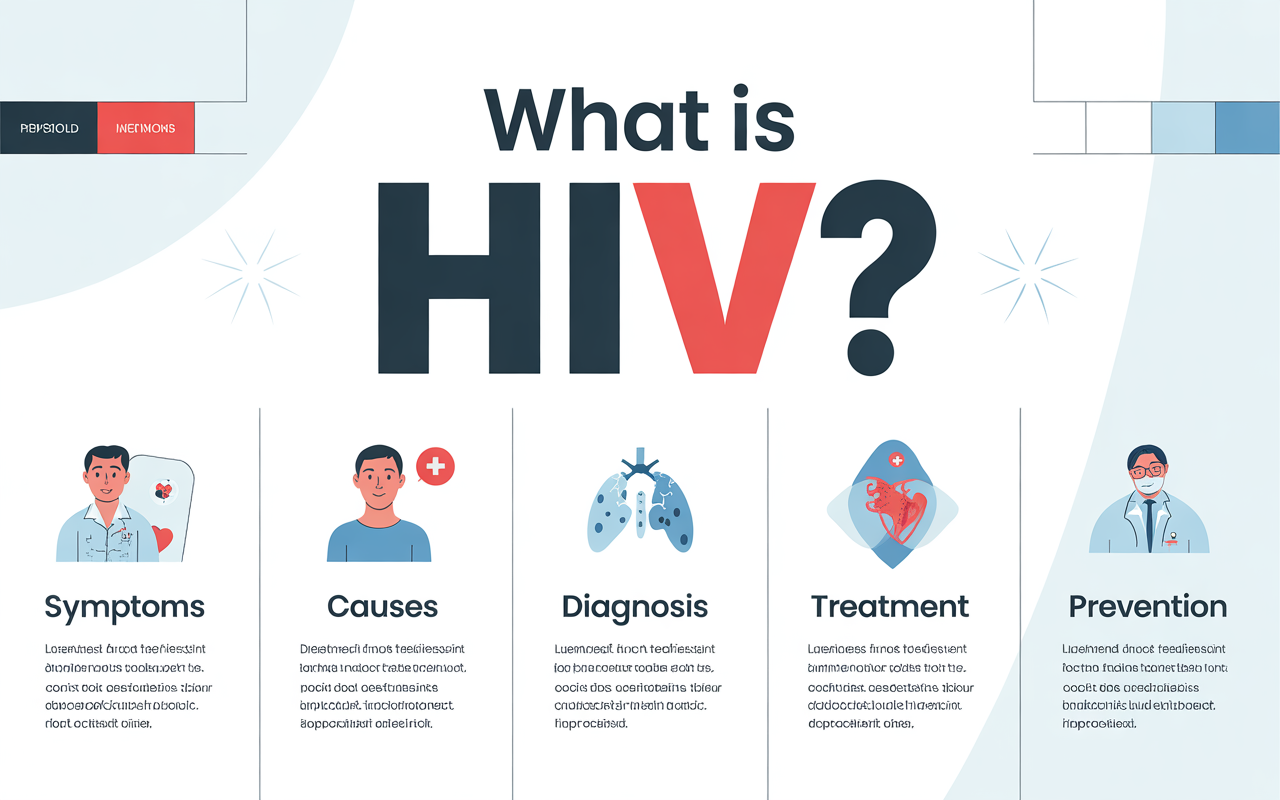
HIV stands for Human Immunodeficiency Virus. It is a virus that attacks the body’s immune system, which is the system that fights off infections and diseases. If HIV is not treated, it can lead to AIDS (Acquired Immunodeficiency Syndrome), which is the final and most serious stage of HIV infection.
Let’s explore everything you need to know about HIV, including its symptoms, causes, how it is diagnosed, treatment options, and ways to prevent it.
What Is HIV?
HIV is a virus that weakens the immune system by destroying a type of white blood cell called CD4 cells (or T cells). These cells help the body fight off infections. Without enough CD4 cells, the body cannot protect itself from bacteria, viruses, and other harmful germs.
Over time, if HIV is not treated, it can cause a person to get very sick. The virus stays in the body for life, but with proper treatment, most people with HIV can live long, healthy lives.
How Does HIV Affect the Body?
HIV does not kill people directly. Instead, it damages the immune system, making it easier for other diseases to take over. When the immune system becomes very weak, the person has AIDS.
At this stage, a person can get opportunistic infections, which are serious illnesses that don’t usually affect people with healthy immune systems. These include infections like pneumonia, tuberculosis (TB), and certain cancers.
Symptoms of HIV
Early Stage (Acute HIV)
The first stage of HIV is called acute HIV infection. It happens 2 to 4 weeks after a person gets the virus. Some people don’t feel sick at all, but many do. Common symptoms include:
- Fever
- Chills
- Night sweats
- Muscle aches
- Sore throat
- Fatigue (feeling very tired)
- Swollen lymph nodes
- Mouth sores
- Skin rash
These symptoms are similar to the flu or a common cold, so many people don’t realize they have HIV.
Chronic HIV Stage (Latency)
After the early stage, HIV enters the chronic stage, also known as the clinical latency stage. In this phase:
- A person may feel fine and show no symptoms.
- The virus is still active but reproduces slowly.
- Without treatment, this stage can last several years.
Advanced Stage (AIDS)
If HIV is not treated, it can progress to AIDS. Symptoms at this stage can include:
- Rapid weight loss
- Extreme tiredness
- Long-lasting fever or diarrhea
- Unusual infections
- Skin blotches or lesions
- Memory loss or confusion
At this point, the immune system is badly damaged, and serious health problems can happen quickly.
Causes of HIV
HIV spreads through certain body fluids, such as:
- Blood
- Semen
- Vaginal fluids
- Rectal fluids
- Breast milk
You can get HIV if these fluids from someone who has the virus get into your body. Common ways HIV spreads include:
1. Unprotected Sex
Having sex without a condom with someone who has HIV is a major risk. This includes vaginal, anal, or oral sex.
2. Sharing Needles
People who share needles or syringes for drugs, tattoos, or piercings are at high risk.
3. Mother to Child
A mother with HIV can pass it to her baby during pregnancy, childbirth, or breastfeeding.
4. Blood Transfusions (Rare)
In countries with strong healthcare systems, donated blood is tested for HIV. But in some places, there’s still a small risk.
How Is HIV Diagnosed?
The only way to know if you have HIV is to get tested. There are several types of HIV tests:
1. Antibody Tests
These tests check for antibodies your body makes to fight HIV. Most people develop these within 3 to 12 weeks of infection.
2. Antigen/Antibody Tests
These tests look for both HIV antigens (parts of the virus) and antibodies. They can detect HIV earlier than antibody-only tests.
3. Nucleic Acid Tests (NATs)
NATs detect the actual virus in your blood. They’re very accurate but also more expensive.
Where Can You Get Tested?
You can get an HIV test at:
- Clinics and hospitals
- Community health centers
- Home testing kits
- Sexual health clinics
Most HIV tests take just a few minutes, and many are free or low-cost.
Is There a Cure for HIV?
No, there is currently no cure for HIV. But it can be controlled with proper treatment.
HIV Treatment: How Is It Treated?
The main treatment for HIV is called antiretroviral therapy (ART). ART uses a combination of medicines to:
- Lower the amount of virus in your body (called viral load)
- Boost your immune system
- Prevent the virus from spreading to others
How Does ART Help?
If taken correctly every day, ART can:
- Lower the viral load to undetectable levels
- Stop the damage to the immune system
- Allow people with HIV to live long, healthy lives
- Prevent the virus from spreading through sex (Undetectable = Untransmittable)
Are There Side Effects?
Some people may have side effects like:
- Nausea
- Diarrhea
- Tiredness
- Headaches
However, modern HIV medicines have fewer side effects than older ones.
Living with HIV
People with HIV can live normal lives if they:
- Take their medication daily
- Go to regular doctor check-ups
- Eat healthy food
- Avoid drugs and smoking
- Practice safe sex
Support from family, friends, or support groups can also make a big difference in emotional health.
Prevention: How Can You Avoid HIV?
HIV prevention is very important. Here are the best ways to stay safe:
1. Use Condoms
Always use condoms during sex. They help prevent HIV and other STDs.
2. Get Tested Regularly
Knowing your HIV status and your partner’s status helps reduce risk.
3. Take PrEP
Pre-exposure prophylaxis (PrEP) is a daily pill for people at high risk. It reduces the chance of getting HIV by up to 99%.
4. Do Not Share Needles
Use clean needles and never share them with anyone.
5. Treat HIV If You Have It
If you have HIV, take ART. If your viral load is undetectable, you cannot pass the virus to others through sex.
Common Myths About HIV
❌ You Can Get HIV from Kissing
False. HIV does not spread through saliva.
❌ HIV Only Affects Gay People
False. Anyone can get HIV—no matter their gender, sexuality, or race.
❌ You Can Tell Someone Has HIV by Looking
False. Most people with HIV look and feel healthy in the early stages.
❌ HIV Equals Death
False. With proper treatment, people with HIV can live long and full lives.
Final Thoughts
HIV is a serious but manageable condition. Early testing and proper treatment can make a huge difference. With modern medicine, people with HIV can live just as long as people without it.
If you’re sexually active, take steps to protect yourself and your partner. If you think you might be at risk, don’t wait — get tested. HIV doesn’t have to be a mystery. Knowledge, action, and care can save lives.
Stay informed. Stay protected. Stay healthy.
If you found this guide helpful, consider sharing it with others who may need clear, simple information about HIV symptoms, causes, testing, and treatment.