
Introduction
Crohn’s disease is a long-term or chronic inflammatory condition that affects the digestive tract. It is one of the main types of inflammatory bowel disease (IBD), the other being ulcerative colitis.
This disease can make life very uncomfortable because it causes pain, diarrhea, fatigue, and other digestive problems. While there is no known cure for Crohn’s disease, doctors can manage it through medication, diet changes, and surgery.
Let’s explore everything about Crohn’s disease — its definition, history, causes, symptoms, types, and treatment options in a simple and informative way.
What is Crohn’s Disease? (Definition and Facts)
Crohn’s Disease is a chronic inflammatory condition of the gastrointestinal (GI) tract, meaning it causes swelling and irritation anywhere from the mouth to the anus. However, it most often affects the end of the small intestine (ileum) and the beginning of the large intestine (colon).
The inflammation can go deep into the layers of the bowel tissue, which makes Crohn’s different from some other intestinal disorders.
Quick Facts about Crohn’s Disease
- Medical term: A type of Inflammatory Bowel Disease (IBD)
- Commonly affected area: Ileum and colon
- First described: Early 20th century
- Main symptoms: Abdominal pain, diarrhea, fatigue, and weight loss
- Not contagious: You can’t catch it from another person
- Lifelong condition: It can come and go in flare-ups and remission periods
Crohn’s disease can affect any age group, but it is most commonly diagnosed in people between 15 and 35 years old.
History of Crohn’s Disease
The condition was first described in 1932 by Dr. Burrill B. Crohn and his colleagues Dr. Leon Ginzburg and Dr. Gordon D. Oppenheimer. They published a paper titled “Regional Ileitis: A Pathologic and Clinical Entity”.
This study described 14 patients who had inflammation in a specific part of the small intestine, the terminal ileum.
Even though similar cases had been reported earlier, this research helped define the disease as a distinct medical condition, and it was named Crohn’s disease after Dr. Crohn.
Since then, scientists have made great progress in understanding how the disease works, though its exact cause is still not completely known.
Causes of Crohn’s Disease
Doctors do not know the exact cause of Crohn’s disease, but it is believed to be due to a combination of genetic, immune system, and environmental factors. Let’s understand each one.
1. Genetic Factors
People who have a family history of Crohn’s disease are more likely to develop it.
Researchers have found that certain genes may increase the risk, especially the NOD2/CARD15 gene.
If a parent or sibling has the disease, the chance of developing it increases 3 to 20 times compared to someone with no family history.
2. Immune System Problems
The immune system normally protects the body from infections. But in Crohn’s disease, the immune system mistakenly attacks healthy gut tissue, causing inflammation.
This overactive immune response is one of the key factors behind the disease’s development.
3. Environmental Triggers
Environmental factors like diet, smoking, stress, and bacteria may also play a role.
Common triggers include:
- Eating a high-fat or processed diet
- Smoking cigarettes
- Overuse of antibiotics
- Exposure to certain pathogens (harmful bacteria or viruses)
4. Lifestyle and Other Factors
Stress, pollution, and lack of exercise don’t directly cause Crohn’s disease, but they can worsen symptoms or trigger flare-ups.
Symptoms of Crohn’s Disease
Crohn’s disease symptoms vary from person to person and depend on which part of the digestive tract is affected. Some people may have mild symptoms, while others experience severe flare-ups.
Common Symptoms
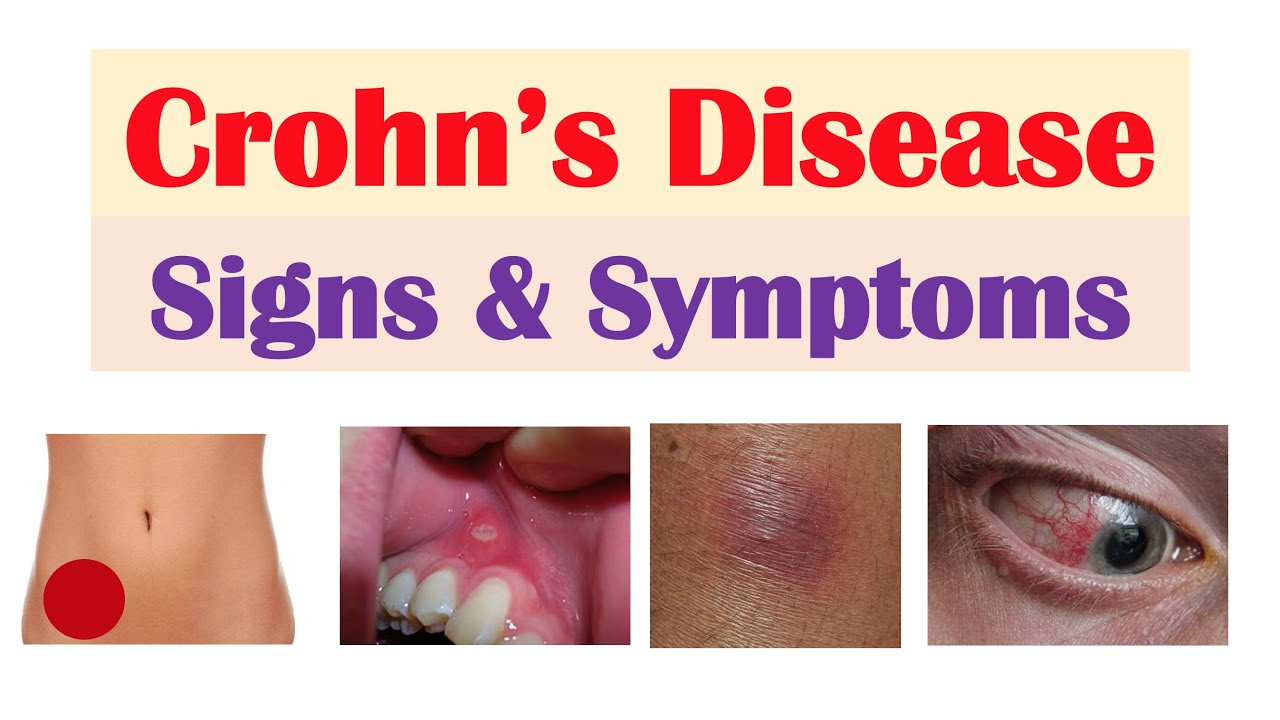
- Abdominal pain and cramping: Usually in the lower right side of the belly
- Diarrhea: Frequent loose stools, sometimes with blood or mucus
- Fatigue: Feeling tired even after resting
- Weight loss: Due to poor nutrient absorption
- Fever: Low-grade fever during flare-ups
- Reduced appetite: Because eating may worsen the pain
Other Possible Symptoms
- Mouth sores
- Joint pain
- Skin rashes or inflammation
- Eye redness or pain
- Delayed growth in children
Crohn’s disease often appears in cycles — there are times of flare-ups (active disease) followed by remission (no or mild symptoms).
Types of Crohn’s Disease
There are several types of Crohn’s disease, depending on which part of the digestive system is affected.
1. Ileocolitis
- The most common type of Crohn’s disease.
- Affects the ileum (end of small intestine) and the colon.
- Symptoms include diarrhea, cramping, and weight loss.
2. Ileitis
- Affects only the ileum.
- Causes similar symptoms: pain in the lower right abdomen, diarrhea, and fistulas (abnormal connections).
3. Gastroduodenal Crohn’s Disease
- Affects the stomach and the beginning of the small intestine (duodenum).
- Symptoms include nausea, vomiting, loss of appetite, and weight loss.
4. Jejunoileitis
- Affects the upper half of the small intestine.
- Causes patchy areas of inflammation, leading to cramps after eating and malnutrition.
5. Crohn’s Colitis
- Affects only the colon (large intestine).
- Symptoms include bloody diarrhea, skin lesions, and joint pain.
How is Crohn’s Disease Diagnosed?
Diagnosing Crohn’s disease can be tricky because its symptoms resemble other digestive disorders like irritable bowel syndrome (IBS) or ulcerative colitis.
Doctors use several tests and procedures to confirm the diagnosis.
Common Diagnostic Tests
- Blood Tests: To check for infection, inflammation, and anemia.
- Stool Tests: To detect hidden blood or infection in the stool.
- Colonoscopy: A camera inserted into the colon to look for inflamed tissue.
- Endoscopy: Examines the upper digestive tract for ulcers or inflammation.
- CT or MRI Scans: Create detailed images of the intestines to detect blockages or abscesses.
A biopsy (small tissue sample) taken during colonoscopy helps confirm if inflammation is due to Crohn’s disease.
Treatment of Crohn’s Disease
There is no permanent cure for Crohn’s disease, but treatments can help control inflammation, reduce symptoms, and improve quality of life.
1. Medications
Several types of medicines are used depending on symptom severity.
a. Anti-inflammatory Drugs
- Corticosteroids and aminosalicylates (5-ASAs) reduce inflammation.
- Used for short-term control during flare-ups.
b. Immune System Suppressors
- Drugs like azathioprine and methotrexate calm the immune system to prevent attacks.
c. Biologic Therapies
- Newer treatments using antibodies that target specific proteins in the immune system (e.g., infliximab, adalimumab).
- Help prevent inflammation and are used for moderate to severe Crohn’s.
d. Antibiotics
- Help control infections and heal fistulas or abscesses.
e. Pain Relievers and Supplements
- Iron, calcium, and vitamin B12 may be needed for people with nutrient deficiencies.
2. Dietary and Lifestyle Changes
Proper diet and habits can make a big difference.
- Eat smaller, frequent meals
- Avoid fatty, spicy, and high-fiber foods during flare-ups
- Stay hydrated
- Quit smoking
- Manage stress with yoga, meditation, or light exercise
Some people benefit from a low-residue diet, which reduces the amount of undigested food passing through the intestines.
3. Surgery
If medicines don’t help, surgery might be necessary to remove damaged parts of the intestine.
However, surgery is not a cure — the disease may return in other areas.
Common surgical procedures include:
- Resection (removing diseased sections of the bowel)
- Strictureplasty (widening narrowed parts of the intestine)
- Drainage of abscesses or fistulas
Living with Crohn’s Disease
Living with Crohn’s disease means learning to manage symptoms and maintain overall health.
Regular doctor visits, following medication plans, and making healthy lifestyle choices can help control flare-ups.
Support groups and counseling can also make coping easier, especially during difficult times.
Prevention and Self-Care Tips
Although Crohn’s disease cannot be completely prevented, you can reduce flare-ups by:
- Avoiding smoking
- Eating a balanced, nutritious diet
- Getting enough rest and exercise
- Managing stress
- Following your doctor’s advice closely
FAQs About Crohn’s Disease
1. Is Crohn’s disease genetic?
Yes, genetics play a strong role. People with a family history have a higher risk of developing the disease.
2. Can Crohn’s disease be cured?
No, there is currently no cure, but treatments can help manage symptoms and improve life quality.
3. What foods should I avoid?
Avoid spicy, greasy, and high-fiber foods, especially during flare-ups. Instead, choose soft, low-fiber meals.
4. Is Crohn’s disease life-threatening?
While Crohn’s itself is not usually fatal, serious complications like bowel obstruction or infection can be dangerous if untreated.
5. Can stress cause Crohn’s disease?
Stress does not cause the disease, but it can make symptoms worse or trigger flare-ups.
Conclusion
Crohn’s disease is a complex, lifelong condition that affects millions of people around the world.
While it cannot be cured, it can be managed effectively through the right mix of medication, diet, and healthy lifestyle choices.
With medical advances and better awareness, people living with Crohn’s disease today can lead full, active, and healthy lives.